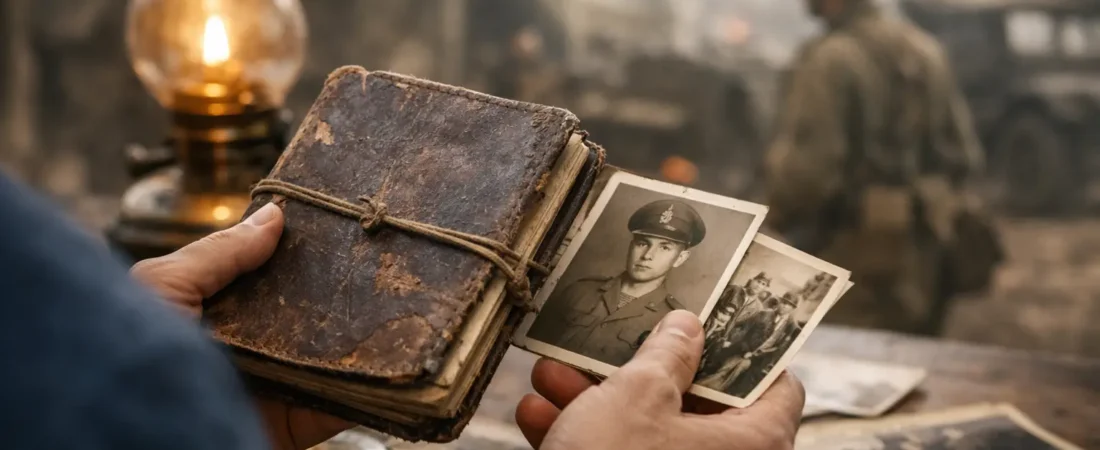
A Roman soldier scratching a complaint onto a wooden tablet at Vindolanda. A plague witness describing carts in the street. A young factory worker recalling the noise, heat, and lint in the air. These are the moments when the archive stops feeling distant. First person history stories do something few formats can – they let us stand close enough to hear breath, fear, pride, and uncertainty inside the record.
That closeness is powerful, but it also deserves care. A good first-person account is not a costume draped over the past. It is a way of approaching history through the testimony, language, and lived experience of people who were there, or through carefully researched reconstruction that stays honest about what is documented and what is interpreted. When done well, it turns names and dates into human stakes without weakening the evidence.
What first person history stories actually do
Most readers do not struggle because history lacks facts. They struggle because facts alone can remain abstract. Ten thousand dead in a disaster is a number. One survivor describing the sound of timbers snapping in darkness is a human reality. The first-person voice narrows the lens, and in doing so, it often reveals more than a broad survey can.
This is one reason diaries, letters, depositions, memoirs, oral histories, and eyewitness chronicles remain so valuable. They preserve texture. We learn what people ate during shortages, what frightened them at night, how they explained events before modern science, and what they believed was worth recording. Official records tell us what states, armies, and institutions wanted preserved. Personal accounts tell us what life felt like from the ground.
That does not mean first-person sources are automatically truer than other records. A witness can misremember, exaggerate, or misunderstand what they saw. Memory shifts over time. Personal testimony is partial by nature. Yet that partiality is also the point. It reminds us that no one in the past lived inside a textbook. They lived inside confusion, rumor, hope, routine, and sudden change.
First person history stories and the feeling of being there
The real strength of first person history stories is not novelty. It is presence. A reader does not just learn that Pompeii was destroyed in AD 79. A reader feels the growing panic when ash begins to fall, daylight fades, and ordinary streets become impossible to recognize. A battlefield ceases to be arrows on a map when a letter home mentions cold boots, hunger, and the fear of dawn.
This kind of storytelling matters because memory is often tied to sensory detail. The smell of smoke, the scrape of a shovel, the dim light inside a trench, the stiffness of formal clothing in summer heat – such details make history easier to retain. For students and general readers alike, the first-person mode can build a bridge between evidence and empathy.
Used carefully, it also restores attention to people who were rarely centered in older historical writing. Kings, admirals, and presidents left extensive records, but so did merchants, servants, migrants, midwives, prisoners, nurses, and soldiers of ordinary rank. Their accounts can complicate grand narratives in useful ways. An empire may look orderly in an official report and deeply unstable in a worker’s diary.
Where the best first person history stories come from
Some of the strongest examples are direct documents. Consider the writings preserved at Vindolanda near Hadrian’s Wall, where thin wooden tablets recorded invitations, supply notes, and military complaints. They are modest records, yet they collapse centuries in an instant. A request for more socks has a strange power precisely because it is so ordinary.
Other first-person materials survive under harsher circumstances. Enslaved people who later gave testimony, immigrants describing ocean crossings, survivors of famine, and civilians caught in siege or plague all left accounts that historians return to again and again. These voices do more than illustrate events. They challenge neat storytelling. They reveal contradiction, silence, and trauma.
Then there is reconstructed first-person narrative, often used in museums, documentaries, and educational media. This approach can be deeply effective, but only when it is transparent. If a historian writes, “I wake before sunrise to grind grain,” based on archaeological finds, household records, and comparative evidence, the reconstruction should rest on real foundations. The reader should never be tricked into mistaking an informed interpretation for a verbatim source.
That distinction matters. The past is already dramatic enough. It does not need invented certainty.
The trade-off between immersion and accuracy
This is where the format becomes most interesting. First-person storytelling creates emotional immediacy, but emotion can overpower nuance if the writer is careless. One vivid voice can imply a whole society when it really represents one class, one region, or one moment in time. A noblewoman’s letter is not the same as a peasant’s experience. A veteran memoir written forty years later is not the same as a battlefield note written that night.
Good history keeps that tension visible. It asks: who is speaking, when, for whom, and why? Was this account written privately, publicly, under pressure, or for posterity? Was the writer literate, powerful, frightened, injured, or trying to justify their actions? These questions do not weaken first-person material. They sharpen it.
In practice, the best historical storytelling often moves between scales. It begins with a voice close enough to feel personal, then widens to context. A sailor’s journal might lead into maritime trade, climate conditions, or naval discipline. A miner’s testimony might open the door to labor history, industrial hazards, and reform movements. The individual becomes a threshold, not a trap.
Why readers trust this format when it is done well
Readers can sense when a historical article respects its sources. The prose may be cinematic, but the confidence comes from restraint. A trustworthy piece does not claim impossible intimacy with every thought a person had. It grounds scenes in records, artifacts, and historical conditions. It lets uncertainty remain visible where uncertainty belongs.
That is why first-person history stories often stay with readers longer than straightforward overviews. They do not flatten the past into a lesson. They preserve its lived complexity. A mother in wartime is still worried about bread. A worker inside a major industrial shift is still thinking about wages, fatigue, and family. A traveler crossing a desert empire is still noticing dust, animals, bargaining, and delay. Large historical forces become legible through ordinary experience.
For educators, this format is especially useful. It helps younger audiences understand that history was once the present for someone else. For lifelong learners, it offers a more intimate route into subjects they may already know in outline. For anyone drawn to archaeology and lost worlds, it restores the human voice to objects in a display case. A shoe, a spoon, a soldier’s buckle, a child’s toy – each becomes easier to imagine in use when paired with lived testimony.
How to read first person history stories wisely
The best way to read them is with both openness and skepticism. Let the voice work on you. Notice its emotion, detail, and rhythm. Then step back and ask what kind of source you are holding. Is it immediate testimony, a later memoir, an edited oral history, or a modern reconstruction? What does it illuminate brilliantly, and what does it leave out?
That habit makes the experience richer, not colder. It turns readers into active interpreters of the past. It also protects against one of the oldest mistakes in popular history: confusing vividness with completeness. A gripping account may be unforgettable and still incomplete. Another source may quietly revise it.
For a brand like Time Vault Capsule, this is where the real excitement lives. Not in pretending the past is simple, but in opening it carefully enough that readers can feel its weight and wonder at the same time.
The finest first-person history stories do not merely tell us what happened. They remind us that history was lived one body, one room, one street, one decision at a time – and that is often where understanding begins.